Sunday, July 10, 2016

Risaikuru - combining music and photography

LONGSTONE - RISAIKURU ( ONAGAWA, ENOSHIMA, KINKA-ZAN )
An evolving photography and music project.


In 2013 I visited the town of Onagawa in Miyagi prefecture Japan which had been badly damaged by the earthquake and tsunami of 2011. While there I also took a trip to the small Island of Enoshima and made a brief visit to the city of Ishinomaki . I took a lot of photographs, a few video clips and some audio recordings, I wrote a lot more about my visit in older posts on this blog. 
After returning home I wanted to combine the photographs I had taken with a Longstone music project and the Risaikuru album was the end result. Initially I had wanted to produce a photobook with an accompanying CD soundtrack even producing a few copies of a dummy photobook.  However the project evolved and became a musical interpretation of two specific photographs and was eventually released as a limited edition vinyl LP package including prints of the images and a CD. Many more photos were included in a PDF booklet available as a download when the album was purchased.
After the album was released we performed the music live at several concerts in the U.K. and the London performance was recorded and later mastered for CD release. In addition a selection of artists including ourselves were invited to remix and rework tracks from Risaikuru and produce a complete new album project. In 2015 I was able to make a return visit to Onagawa and see how the town was being rebuilt and during this visit took a trip to the island of Kinka-zan. This became the title of the remix project and photographs from this 2015 visit were incorporated into the artwork and booklet for the new release. 
Please click on the links below to listen to the music, see more of my photographs and read the booklets that came with the releases. 
All photos on this blog can be clicked once or twice to view in full quality.


Onagawa manhole cover photographed in 2013 cast with an image of Umineko seagull the cries of which I recorded and added to the music on the LP.


Enoshima Island seen from the ferry returning to Onagawa in 2013
A recording of the ferry's engine during this journey was incorporated into the music on the LP.

Risaikuru has been  an ongoing project mixing photography from my two visits to Onagawa in Miyagi prefecture Japan in 2013 and 2015 with the music I produce and perform with my friends in the group Longstone.

An extensive PDF booklet with photographs from Onagawa and Enoshima plus essays explaining the original Risaikuru project can be downloaded here 

The cover art for the original Risaikuru LP and digital album designed by Steve Moody. 
The  background photograph taken in 2013 in Onagawa shows detail of soil created by the recycling  of tsunami rubble. It is one of the two photographs included in the LP package which were interpreted by the musicians contributing to the recordings.

You can listen to the album or download it free of charge at this link, the vinyl LP is still available to purchase here as well.

To create the music for the Risaikuru album each musician was given two photographs, one from Onagawa and one from Enoshima then asked to independently produce some music or sound inspired by the photographs. These recordings were collected together and edited into the final music.

Chris Cundy who was one of the members of Longstone contributing to Risaikuru has made his demo recordings available as a mini album. To listen to or download his interpretations of the photographs please check this link


This is the Onagawa nuclear power station photographed on the ferry to Kinka-zan island in 2015 I also passed and photographed the power station on the way to Enoshima in 2013. 
When the Risaikuru remix project was first proposed we created this track which uses some pieces of dialogue from a news report discussing why the Onagawa power station was not damaged by the huge tsunami as happened at  Fukushima.

In November 2015 we performed the tracks from the Risaikuru album live in London and the show was recorded for CD release. It was decided not to use photographs for the artwork of this CD and instead the sleeve was designed entirely by our friend Steve Moody 


The original Risaikuru album was released on London record label Linear Obsessional run by Richard Sanderson. Because of the themes of recycling and reworking explored by the project and the way in which the music on the LP had been constructed Richard suggested inviting other artists from his label to remix or rework the tracks to create a new album, in addition Longstone would also produce some new remixes to add to the project. 
As the tracks started to be delivered to the label I visited Onagawa again and was able to see how the town was recovering two years after my initial photographs were taken. 
The town was being rebuilt , re-imagined and redesigned by the people who chose to stay on after the tsunami . I also visited the island of Kinka-zan to see a rare festival take place and it was this peaceful mountain like place with it's shrine surrounded by trees that inspired the title and imagery used for the new CD which once again was accompanied by a PDF booklet containing photographs and essays.


The CD was packaged with the live album and three photographic prints of Onagawa and kinka-zan for a very limited edition release.
You can listen to or download the music with the booklet at this link


Police , Shinto Priests and festival participants gather for the opening ceremony of the antler cutting festival on the grassy slopes of Kinka-zan Island, October 2015.


The view from the observation deck of the newly opened Onagawa railway station looking along the nearly complete shopping street that runs towards the harbour, October 2015 .


By contrast a similar view in 2013 taken a little further back just behind where the new station stands today 


Labels: , , , , , ,

Sunday, June 19, 2016

Self-made Photobooks as an Object - A Talk by Yumi Goto 14/06/2016 Review.


I am very interested in Japanese photography and it's history and like to collect photobooks by Japanese photographers. Photobooks are a very popular way for artists in Japan to present a body of work which makes it accessible to the public without having to visit a gallery.
Recently I became aware of a trend in young contemporary Japanese photographers to produce amazing hand made photobooks in very small editions . A number of these, which seem to be winning awards and helping some very talented photographers make a name for themselves, originated as part of an annual workshop run from the Reminders Photography Stronghold in Tokyo .
These workshops are titled " Self-made Photobooks as an Object " and are curated by Yumi Goto who established the Reminders photography stronghold gallery which also contains a photobook library and project space . Please click here to visit their website.

When I saw that The Japan Foundation had organised a talk in London by Yumi Goto also titled "Self-made Photobooks as an Object" I reserved a seat, booked time off work and bought a bus ticket straight away. Incidentally the ticket for the talk was free and refreshments of wine or soft drinks were included as well.
The talk was very interesting and as I am lucky enough to own copies of a number of the books discussed I thought I would try to write a short review here .

The "Trade" edition of " Silent Histories " by Kazuma Obara 

The talk was organised by The Japan Foundation in association with Photobook Bristol and took place at the Swedenborg Society building near Holborn which looked a very interesting building though there was no time to explore. 
Yumi Goto presented the talk in her native Japanese with an interpreter providing an English translation at regular intervals . This seemed to work well given the talk was organised by the Japan Foundation and the audience contained among others a mixture of Japanese and English attendees.  The talk was nicely illustrated with projections of photographs and some short videos plus a number of example books and dummy books had been bought along for the audience to examine at the end.

The first hour consisted of the talk by Yumi who firstly introduced herself and her gallery in Tokyo, explaining the photobook library they have established and how it was damaged by a water leak and subsequently restocked.  
The bulk of her talk focused on the workshops run over the last few years at the gallery, the methodology used to encourage the participating photographers to expand an idea into a book project and the development of a handmade book through various prototype stages.
This was fascinating, Yumi explained that before the workshops start each participant has two meetings  to discuss their idea each time being encouraged to develop the idea and collect more photographs. In addition it seemed they were encouraged to think about how the proposed photobook might tell a story to the reader . Then at the week long workshop they look collectively at how they might design and present the books.

As an interesting but important aside Yumi explained that a particular rare handmade book from Europe had inspired her technique : "Belgian Autumn" by Jan Rosseel which you can read about at this link 
The handmade book tells a story using a mixture of new photography by the artist , archive photographs, reproductions of leaflets , text and graphics. It is housed in a box and was limited to a very specific number of copies related to the story.
All of these techniques have resurfaced in the fantastic and critically successful books to have come out of Yumi's workshops.

For the remainder of Yumi's talk she presented a number of the books that have been made as a result of her workshops as a way to illustrate the techniques and ideas that were developed and used by the artists . Most of these books have won prizes or been nominated for awards and some have been reissued in factory made " Trade editions " that accurately reproduce the original handmade book and allow more people access to the work.
One of the artists Hajime Kimura was a guest at the talk and was able to answer questions and discuss his book project " Snowflakes dog Man" which was very interesting. This book is an amazing piece of art and sold out it's edition of 69 copies as pre-sales, each copy is handmade by Hajime and he is still working to finish production.

The rear design of Snowflakes Dog Man, screen printed case with pockets containing three books.

The three books and case, each book is bound in a different way, an incredible amount of work has gone into this project .

Other books presented as part of the talk included:
Red String by Yoshikatsu Fujii ( Original handmade edition of 35 Trade edition of 500)
Silent Histories by Kazuma Obara ( Original handmade edition of 45 copies Trade edition 0f 1900)
Recruit by Hiroshi Okamoto ( Handmade edition of 147 copies )

I've added photos of these books and relevant links at the end of this review.
Examples of these books were all on display at the talk and it was possible to look through them at the end of the evening which really added to the value of the event.

After the initial one hour talk a discussion between Yumi and David Hendley was scheduled for 30 minutes. David started the debate by asking about the graphic design elements of the books wondering if the photographers collaborated with designers, however Yumi explained usually the photographers design the books themselves as a result of the workshop process. Questions were opened up to the audience which raised some very interesting topics for discussion. 
One person raised the question of where do these very limited and wonderful pieces of art end up ? Do any get sent to national collections or museums or do they simply end up with private collectors ? 
It seems that they don't currently end up in public collections although copies presumably are held in Reminders own library. Apparently a number of copies are bought by photobook sellers and the rest sold directly to fans or collectors. 
The purpose of making such limited runs and the value of this to the artist was discussed, it seemed that it's a way to get noticed, to sell themselves which seems to be working well given prizes are being won and the best books are being published as trade reproductions in larger editions.
The pricing of the books came up , they are often quite expensive but as David Hendley pointed out they are objects of art handmade by the artist themselves and in this respect the usual price of say £50 - £100 seems pretty reasonable if not cheap. Hajime Kimura was asked if he made a profit ( his boxed set of books is quite expensive , selling for between £100 and £200 but it is very elaborate and took a fantastic amount of work ) he explained that after paying for materials and printing and when you factor in the quite amazing amount of time it is taking him to manufacture all this by hand he certainly will not make money. However the book is gaining him a lot of attention, I'm sure it will win awards and a deal will be struck to make a trade edition because it really is excellent so all the effort will have been worth it to raise his reputation as an artist . After the talk I was able to have a quick chat with him and he explained he was lucky because he had obtained a grant to study in Germany so he could work on the project as part of this study.

All in all it was a very good and very interesting event especially for me as I am particularly interested in the subject . However it was presented in a way that would have been accessible to people who had no previous interest in Japanese photography or photobooks. It was well illustrated and contained interesting anecdotes and personal stories. The books themselves, which are very impressive, were available for the audience to handle and examine which really added to the experience. Plus Yumi, Hajime and David were all available after the event to chat and answer more questions informally.
All this for an entry fee of zero !!

The books: 
all photographs here are taken by me and all the books are my personal copies.
You can click on them once or twice to view in full quality.
Original hand made copies of these books were available to view at the talk.

Red String ( Trade edition )
Cloth bound , sewn with red thread, a reproduction of the handmade edition.


Left half of the book about the photographer's Father, pages open to the left,.
Right hand side about his Mother, pages open to the right .

My copy came with a strong cloth bag with the same photo as the cover sewn with red thread .

Recruit ( handmade edition of 147 copies)

147 copies one for each day the photographer's subject spent looking for employment

The book depicts the process of graduate job hunting in Japan 
as experienced by the photographer's best friend.


Silent Histories ( Trade edition of 1900 ) this is a signed copy most trade copies were not signed.
Some copies also came with a signed print.

The book depicts the story of people who survived the fire bombing of Osaka in WW2 
It is illustrated with inserts of old photographs , reproductions of propaganda magazines and disability cards interspersed with new photographs of the subjects as they are today.


The hand made edition was 45 copies and the trade edition 1900
a total edition of 1945 copies representing the end of WW2


Snowflakes Dog Man outer box front cover, screen printed.

Small book contained in the side pocket hand bound Japanese style with double folded pages.
There are more photos hidden in the paper folds.

My copy came with a matching screen printed T-shirt.

I was lucky to get an original handmade copy, signed and numbered 10 from an edition of 69 .


Labels: , , ,

Monday, May 30, 2016

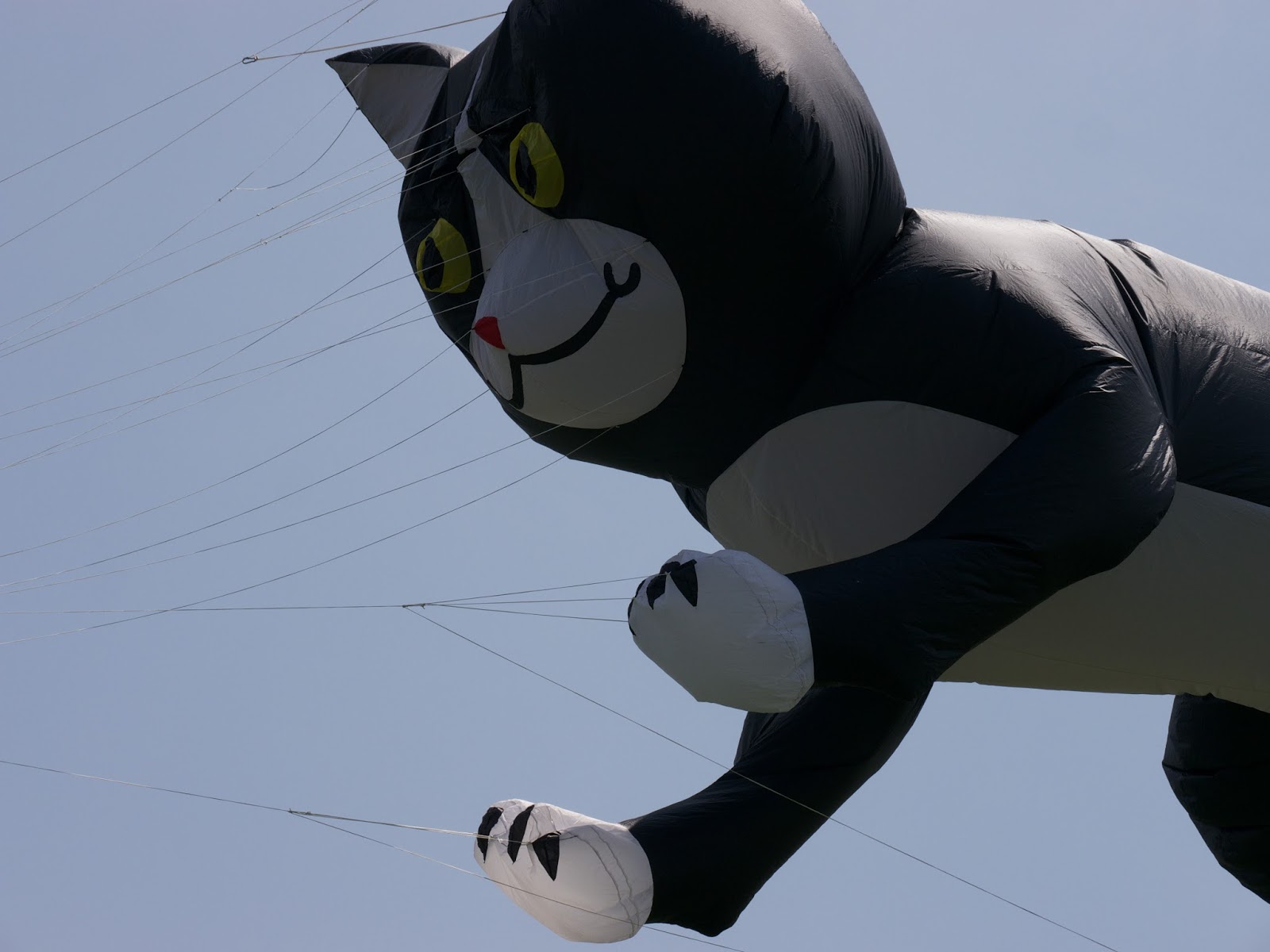
Kite Festival Minchinhampton Common 29th May 2016


Labels: ,